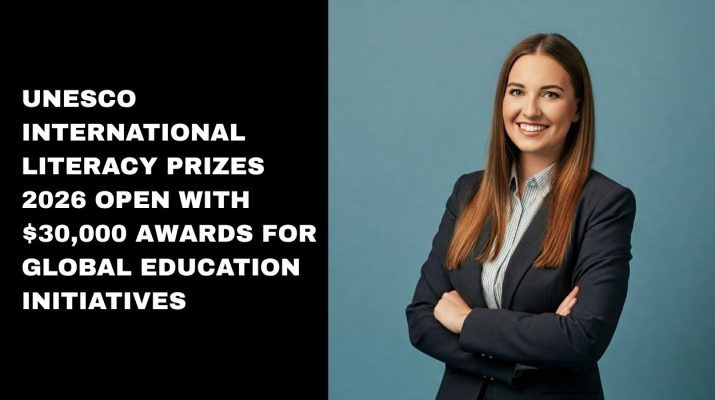
UNESCO has officially opened nominations for the International Literacy Prizes 2026, a global recognition programme highlighting outstanding efforts to improve literacy worldwide.
The initiative comes at a time when many countries are reassessing progress toward the Sustainable Development Goals (SDGs), particularly in education, and preparing for long-term post-2030 strategies.
This is not a scholarship for individuals, but a global award scheme for organisations and initiatives that are making measurable impact in literacy development.
Programme Overview
The UNESCO International Literacy Prizes 2026 recognise innovative literacy projects led by governments, NGOs, educators, and institutions around the world.
The 2026 theme is:
“Literacy for people, the planet and prosperity”
This reflects a broader shift in how literacy is viewed—not only as a basic education goal, but as a tool linked to climate awareness, digital inclusion, and socio-economic development.
What Winners Receive
Each year, UNESCO selects six winning initiatives across two award categories:
- UNESCO King Sejong Literacy Prize (3 awards)
- UNESCO Confucius Prize for Literacy (3 awards)
Each laureate receives:
- $30,000 financial award
- Official UNESCO medal
- Certificate of recognition
While not a personal scholarship, the award funding is typically used to expand literacy programmes, scale operations, or support new community-based education initiatives.
Who Can Apply
Eligibility is open to:
- Non-governmental organisations (NGOs)
- Government-led literacy programmes
- Individuals involved in large-scale literacy initiatives
However, eligibility alone is not enough. Applications must demonstrate clear, measurable impact in literacy improvement.
Key Requirement: Nomination System
A unique feature of this programme is that direct applications are not accepted.
All submissions must go through an official nominating body, such as:
- A National Commission for UNESCO
- A UNESCO-affiliated organisation or partner NGO
This ensures that only vetted and validated programmes are considered at the international level.
What UNESCO Looks For
Selection is highly competitive and based on:
- Proven results in improving literacy rates
- Innovation in teaching or delivery methods
- Alignment with the 2026 global theme
- Scalability and long-term sustainability
- Evidence-based impact reporting
Programmes that combine literacy with digital skills, environmental education, or community development are increasingly prioritised.
Why This Award Matters
The UNESCO Literacy Prizes have been awarded since 1967 and have recognised more than 500 initiatives globally.
Their importance lies not only in funding but in global visibility—highlighting successful literacy models that can be replicated across countries facing similar challenges.
Current global estimates show that hundreds of millions of people still lack basic reading and writing skills, making literacy one of the most persistent development gaps worldwide.
Who Should Consider This Opportunity
This recognition is best suited for:
- NGOs running established literacy programmes
- Education-focused organisations with measurable outcomes
- Government agencies implementing literacy reforms
- Social innovators working in education access and inclusion
It is not suitable for individuals without institutional backing or for early-stage projects without documented impact.
Application Timeline
The application process is carried out in two stages:
- Submission to nominating bodies: 18 May 2026
- Final submission to UNESCO: 1 June 2026
Only nominations forwarded through official channels will be reviewed by UNESCO’s international jury.
Apply Through Official Channel
UNESCO International Literacy Prizes information page:
https://www.unesco.org/en/prizes/literacy