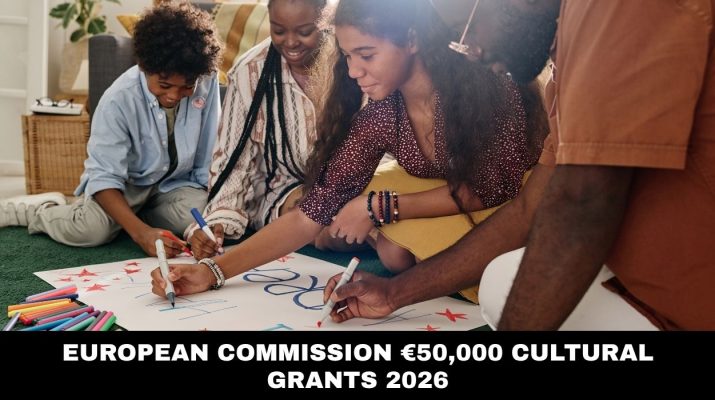
The European Union National Institutes for Culture has launched the second edition of its Spaces of Culture programme, offering grants of up to €50,000 to support collaborative cultural projects across Sub-Saharan Africa.
This initiative, backed by the European Commission, invites cultural organisations, civil society groups, and creative professionals from Africa and Europe to jointly design and implement impactful projects. The 2026 call, which opened on 1 April 2026, will fund seven innovative projects built on collaboration, shared ownership, and mutual exchange.
Why This Grant Is Significant
Historically, many cultural funding programmes involving Africa have been shaped largely by external priorities. The Spaces of Culture initiative takes a different approach by placing African partners at the center of project design and execution.
Rather than supporting one-sided initiatives, this programme requires balanced partnerships, ensuring that local organisations actively shape the direction, outcomes, and impact of each project.
It forms part of the broader Africa-Europe cultural cooperation strategy under the European Commission, aimed at fostering:
- Equal collaboration
- Knowledge exchange
- Long-term cultural partnerships
Funding and Project Scope
Each selected project can receive up to €50,000 in funding.
The programme supports a wide variety of themes, including:
- Arts and creative industries
- Digital innovation and cultural technology
- Education and youth engagement
- Gender and social inclusion
- Heritage and preservation
- Human rights and civic participation
- Sustainability and climate awareness
- Tourism and sports
Applicants are encouraged to propose creative, forward-thinking formats that go beyond traditional exhibitions or performances. Projects that integrate innovation, community engagement, and cross-cultural dialogue are particularly valued.
Partnership Requirements (Very Important)
This is not an individual grant—applications must be submitted by a consortium.
Each proposal must include:
- At least three local cultural or civil society organisations from Sub-Saharan Africa
- At least three EUNIC member organisations (or two in countries without a EUNIC cluster)
- Active involvement of an EU Delegation
This structure ensures that projects are genuinely collaborative rather than symbolic partnerships.
Who Should Apply?
The programme is best suited for:
- Cultural organisations and NGOs
- Creative industry professionals
- Arts institutions and collectives
- Civil society organisations working in culture or development
Applicants with existing partnerships or networks within EUNIC clusters or EU Delegations will have an advantage, although new entrants can still apply if they successfully build the required consortium.
Selection Process
Proposals will be evaluated by an independent panel of experts from both Africa and Europe, based on:
- Quality and feasibility of the project
- Strength and balance of the partnership
- Alignment with cultural relations principles
- Potential for long-term impact and collaboration
Strategic Insight
One of the strongest aspects of this programme is its emphasis on co-creation and shared leadership. By requiring multiple local partners, it avoids the common issue of externally driven cultural projects with limited local ownership.
However, the funding size (€50,000) and limited number of awards (seven projects) mean that this initiative is best viewed as a partnership-building catalyst rather than a large-scale funding solution.
Application Deadline
- Deadline: 21 June 2026 (23:59 CAT)
- Applicants are strongly encouraged to begin forming partnerships before 30 April 2026
Given the complexity of assembling a consortium, early preparation is essential.
How to Apply
You can access full details and submit your application via the official EUNIC website:
https://eunicglobal.eu/projects/spaces-of-culture
Final Thoughts
The EUNIC Spaces of Culture 2026 programme offers a unique opportunity for African and European cultural actors to collaborate on equal footing. Beyond funding, it provides a platform to build lasting partnerships, experiment with innovative ideas, and strengthen cultural ecosystems across regions.
For organisations ready to engage in meaningful international collaboration, this is one of the most strategically designed cultural grants currently available.